

Blind Spots
Also, paired, teaching hard history, reconciliation, and proximity to difference

Hola mi gente,
I like getting places in nontraditional ways. That’s why I named my newsletter An Uncommon Commute. As a grad student, I would rollerblade to campus and sit through classes without any shoes. In my professional life, I’ve enjoyed riding my bike to work, regardless of what kind of weather the day brings. I may even continue my new hobby into the fall and venture a different kind of commute.
My passion for biking, though, extends beyond commuting. I love packing up my camping gear and going on longer bike tours. There’s something exhilarating about getting from point A to point B by your own power and skill, creating that good friction. I’m inspired by people like Oliver Widger—who quit his corporate job, learned how to sail, and, this past spring, sailed to Hawaii with his cat, Phoenix. Or Demarcus James—who is currently skateboarding across the United States to spread awareness about mental health (check out his GoFundMe page).
Whatever your preferred transportation, changing it up every once in a while can help you gain a new perspective. It might mean switching your travel method, or taking a different path to get there—but the point is this: it breaks you out of your routine and alters the way you experience the world. All of us have blind spots—especially, perhaps, car commuters. If we want to grow, or get anywhere in life, we need things that bring those blind spots more clearly into our field of vision.
So with that in mind, here are 5 connected things I thought were worth sharing:
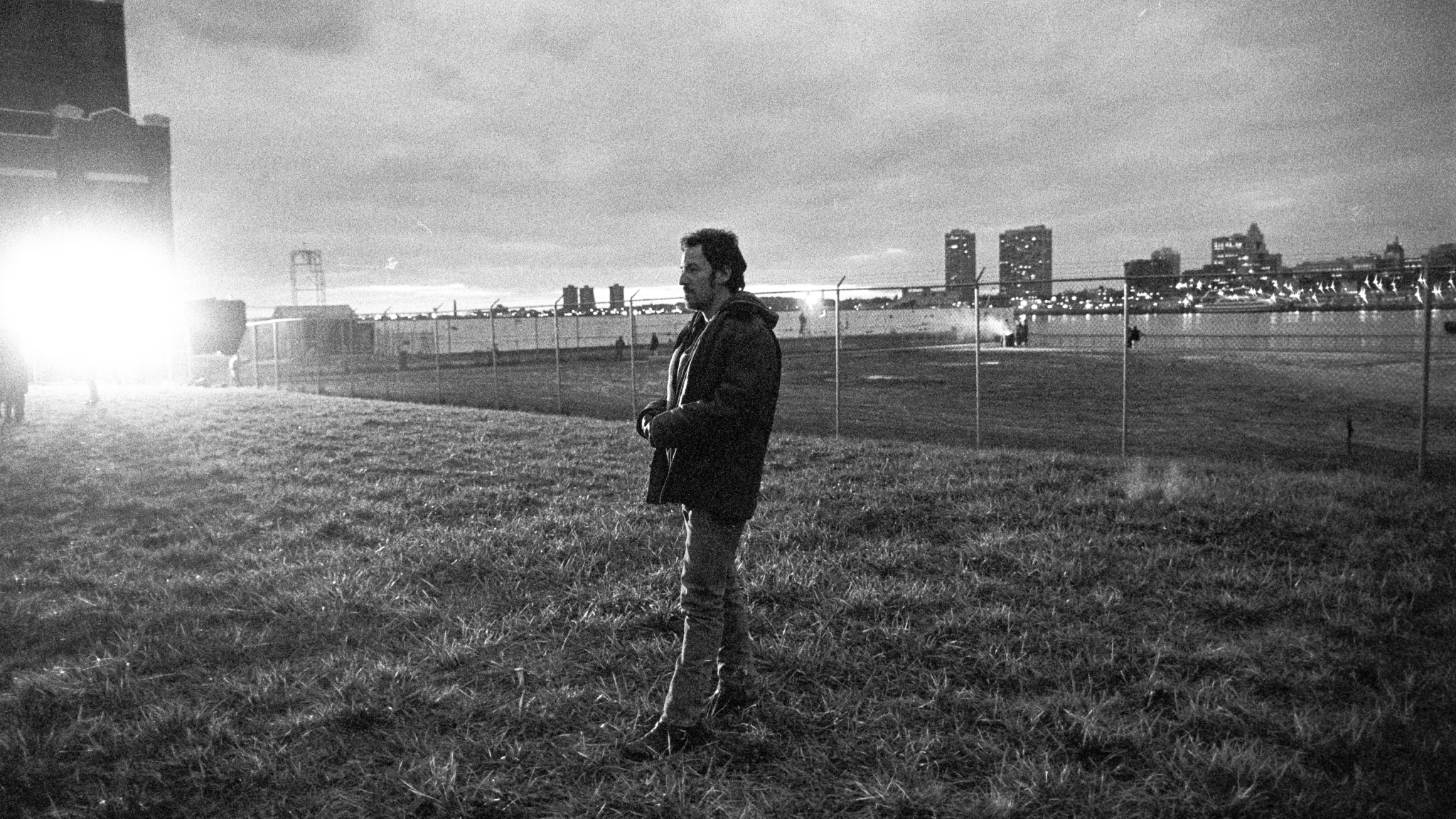
I’m a sucker for the synth-pop sounds of the '80s that bring me welcomed feelings of childhood nostalgia—like with Bruce Springsteen’s 1984 album Born in the U.S.A. Springsteen, of course, would go on to bring both synthesizers and drum loops well into the '90s with songs like “Streets of Philadelphia” and “Secret Garden”—two of my favorites. If you’re a fan of the Boss, you’ll be happy to know he just came out with a live album, Land Of Hope & Dreams, along with a whopping box set of seven individual and previously unreleased albums, Tracks II: The Lost Albums. According to NPR’s essential listening guide, the seven albums on his new box set were recorded between 1983 and 2018—and while that would be a respectable amount for any artist’s career, for Bruce “it’s only a partial representation of what he didn’t release.” Due to my synth sensitivities, it’s the second of these albums—The Streets of Philadelphia Sessions—that really stands out. The opening track of this album is a song called “Blind Spot,” and it’s one I’ve had on repeat the whole month.
“Everybody's got a blind spot. Brings 'em down.
Everybody's got a blind spot they can't get around.”
- Bruce SpringsteenAs Bruce tells it, “Everybody’s got a blind spot. Brings ‘em down.” Is there a better way to describe the perils of human relationships? Angie and I have been married for 17 years. With time and effort comes a deeper understanding of oneself and one’s partner—both in basic and profound ways. But identities are not stagnant and neither are relationships. They evolve and dart into new and unexpected directions. Blind spots can sneak up on you and develop into real problems if not attended to. Fortunately, there are some good resources out there that help move them into view. The Gottman Institute offers many useful tools for strengthening relationships—romantic and otherwise. And the Paired App gamifies relational connection while facilitating meaningful discussion between you and your partner. It’s Duolingo meets iMessage meets your journaling app of choice. Angie and I have been giving it a try and it’s already helping us grow in unforeseen and fun ways.
Maybe you’ve seen this classic experiment. It demonstrates that humans have selective attention and miss things that are right in front of them. How much more so do we miss the ways in which others experience the world, or experienced it in the past? As a teacher, I believe strongly that at its core, education is about reflection. And reflection forces us to ask hard questions and seek answers that help us to grow, both as individuals and as communities. It’s almost always uncomfortable, but discomfort is often the starting point for finding a better way. This is why I think podcasts like Teaching Hard History are valuable resources. In seasons 3 and 4 of the series, my good friend Dr. Charles Hughes—of Memphis and Stoney Acres Barn Dance fame—shares music from the Civil Rights Movement and Reconstruction Era. His segments, along with the whole series, are excellent and I hope you check them out!
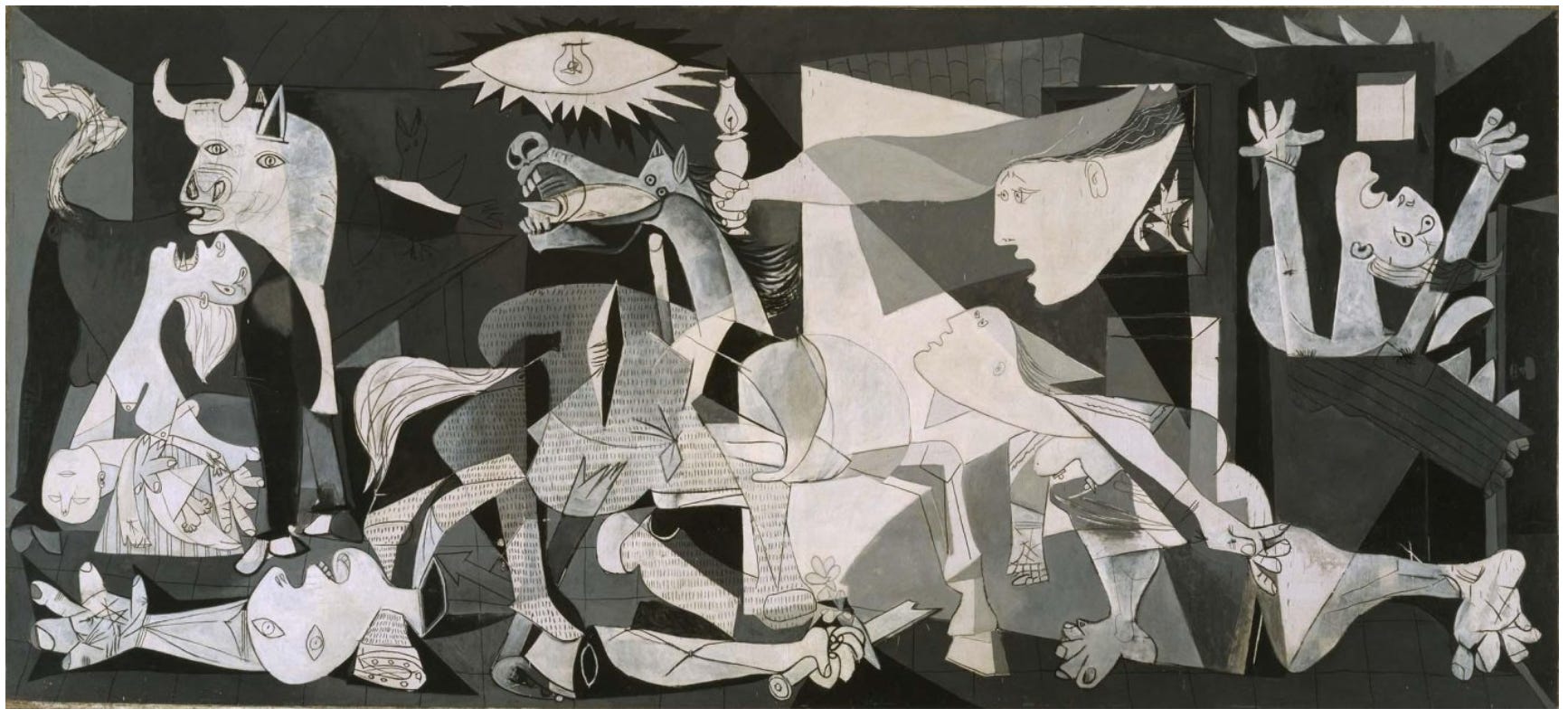
Whole nations have blind spots too. Imperfect human beings are part of imperfect nations, after all. Pablo Picasso’s famous painting Guernica captures the horrors inflicted upon a small town in the Basque region of northern Spain during the Spanish Civil War. On April 26, 1937, at the request of Spanish Nationalist leader Francisco Franco, German and Italian military units bombed Guernica—or, Gernika in Euskara, the regional and mysteriously ancient language of País Vasco—with the intent to kill as many civilians as possible. On a recent trip to Spain chaperoning a group of high school students, we observed Picasso’s painting at el Museo de Reina Sofía in Madrid. But on a previous trip with students, just over 20 years ago, we visited Guernica itself. It was incredibly moving to be in the very spot that had been razed to the ground almost seventy years earlier. Even more moving, though, was visiting the Gernika Peace Museum, which honors those lost during the bombing and outlines the reconciliation process the town and countries involved have gone through to make peace with one another. To me, it was a beautiful example of acknowledging a horrid past rather than ignoring it—and moving forward in ways that build up rather than continue to tear down. We do well when we treat our past failures as a nation similarly.
Intentionally getting close to difference is a great way of forcing your blind spots into view. Travel can change the way you see yourself and the world, of course, but so can going to different spaces in your community and interacting with the people you find there. I recently came across this interview with travel guru Rick Steves, which highlights all the wonderful benefits travelers gain from leaving their comfort zone. But tourism has blind spots of its own—like gentrification in Puerto Rico and other parts of the world, for example. This week I started reading Paige McClanhan’s The New Tourist: Waking Up to the Power and Perils of Travel. In her book, she outlines ways to break out of more destructive models of tourism in favor of something more sustainable. One such form is tourism that make proximity to difference its primary goal. In his compelling TED Talk, peace activist and entrepreneur Aziz Abu Sarah shares his own reconciliation story and how he founded Mejdi Tours as a way of helping others do the same. It’s another beautiful story of how getting proximal helps us overcome our hate and pursue love instead.
Thank you all for reading! I hope you found some inspiration for today’s moments, whatever they might be. If you enjoyed reading, go ahead and click subscribe to receive future newsletters.
If you know someone who might be interested in receiving this newsletter, please feel free to pass it along.
Be well and I hope to see you down the road sometime soon!
Eric
Another great writing! Thanks and peace to you!
💓